
Why Does My Dog Sleep So Much? Understanding Your Dog’s Sleeping Habits
If your dog seems to spend a surprisingly large part of the day asleep, you are not imagining it.
Dogs naturally sleep much more than humans, and for many adult dogs, long naps throughout the day are completely normal. The exact amount varies depending on age, lifestyle, activity level, breed, and individual personality.
Most adult dogs sleep around 12–16 hours a day, while puppies and senior dogs may sleep even longer.
Why Does My Dog Sleep So Much?
Dogs are what researchers call polyphasic sleepers. Instead of sleeping mainly in one long block at night, they tend to sleep in several shorter periods across the day and night. PubMed
That is why your dog may sleep overnight, nap after breakfast, doze again in the afternoon, and still be perfectly ready for another nap in the evening.
Their sleep pattern is simply different from ours.
How Much Sleep Do Dogs Need?
There is no single number that applies to every dog.
Adult dogs often sleep somewhere in the region of 12–16 hours per day, while puppies can sleep considerably longer. Young dogs are growing quickly and processing huge amounts of new information, which makes rest particularly important.
Research into young dogs has also shown that sleep patterns change as dogs mature. Puppies tend to sleep more during the daytime than dogs approaching adulthood. PubMed
Older dogs may also begin sleeping more as their activity levels and energy needs change.
The important thing is not whether your dog matches an exact number, but whether their sleeping pattern is normal for them.
Why Puppies Sleep So Much
Puppies often seem to switch between two extremes: intense activity and complete exhaustion.
Everything is new.
They are learning about people, other dogs, sounds, smells, routines, boundaries, and the environment around them. At the same time, their bodies are still developing.
Sleep gives them time to recover from all of that physical and mental stimulation.
So if your puppy plays wildly for an hour and then suddenly falls asleep in the middle of the room, it is usually nothing unusual.
Why Older Dogs May Sleep More
Senior dogs often need more rest than younger adults.
They may tire more easily, move at a slower pace, or simply spend more of their day relaxing.
However, what matters most is whether the change happens gradually or suddenly.
A dog who has always loved sleeping is very different from a normally active dog who suddenly begins sleeping for much longer periods or becomes difficult to wake.
Changes in sleep combined with changes in appetite, movement, behaviour, or general energy are worth discussing with a veterinarian.
Does Exercise Affect How Much Dogs Sleep?
Yes, but not always in the way people expect.
A dog that has had a long walk, training session, playtime, or a particularly stimulating day may naturally sleep more afterwards.
Mental activity can also be tiring.
Sniffing, exploring new environments, learning commands, meeting other dogs, and processing unfamiliar experiences all require attention.
This is why a dog may return from a relaxed sniffing walk and sleep deeply even if the walk was not particularly fast or physically demanding.
Dogs Also Sleep Because They Can
Dogs living in our homes often have plenty of opportunities to rest.
There may simply be very little happening during certain parts of the day.
If the household is quiet and the dog has already eaten, walked, played, and explored, sleeping is a perfectly reasonable way to spend the next few hours.
This does not automatically mean the dog is bored.
The wider context matters. A dog that enjoys exercise, interaction, play, and exploration but also sleeps frequently is usually just following a normal canine rhythm.
Why Does My Dog Sleep All Day but Wake Up When I Move?
Anyone who lives with a dog knows this phenomenon.
Your dog appears to be completely asleep — until you stand up.
Suddenly, they are awake and following you into the next room.
Dogs can move between rest and alertness relatively quickly. Their sleep is often divided into shorter periods, and they remain highly responsive to changes in their environment.
The sound of a cupboard opening, footsteps toward the front door, or even the movement that usually happens before a walk can be enough to wake them immediately.
Does Sleep Affect a Dog’s Behaviour?
Sleep is not simply downtime.
Research suggests that sleep quality and sleep duration may be connected with canine behaviour and emotional wellbeing. One large study involving more than 1,300 dogs found relationships between reported sleep characteristics and certain behavioural problems, although the researchers also emphasised that canine sleep is complex and that more research is needed.
Rest allows dogs to recover from physical activity and from everything they experience during the day.
It is another reason why giving a dog somewhere quiet and comfortable to sleep matters.
Creating a Comfortable Place to Rest
Because dogs spend such a significant part of their lives sleeping, their resting space deserves some thought.
Some dogs prefer stretching out completely. Others naturally curl into small spaces or lean against the sides of their bed.
A dedicated resting place within the living room also lets a dog remain close to the household while still having its own comfortable space.
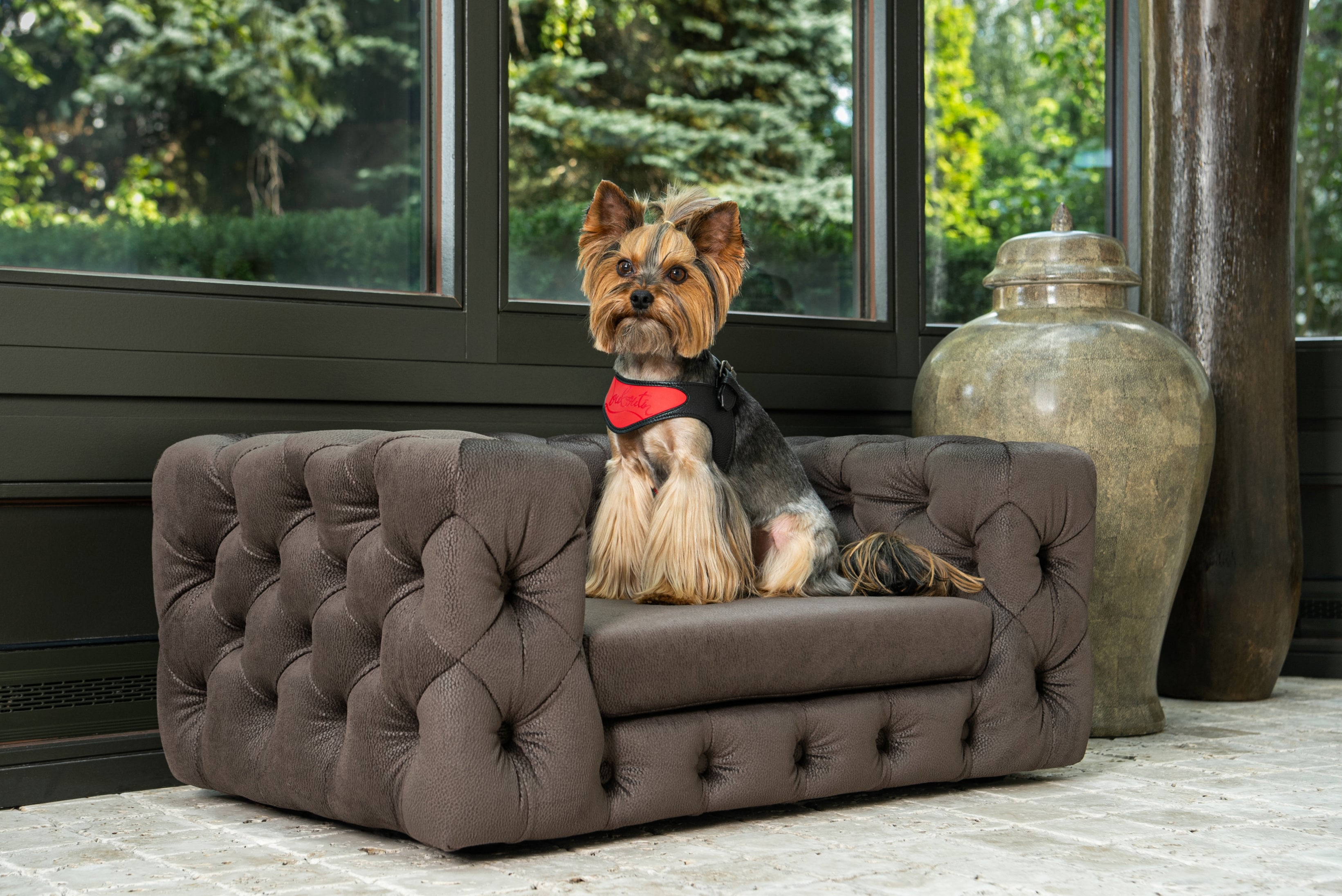
This is where thoughtfully designed luxury dog sofas and designer dog furniture can work particularly well.
A soft, enveloping design such as the Yin Yang Pet Sofa creates a cosy place for dogs that enjoy curling up, while more structured dog sofas may suit dogs that prefer firmer support and more room to stretch.
The best sleeping place is ultimately the one your dog repeatedly chooses for themselves.
And considering how much of their life they spend asleep, comfort is hardly a small detail.