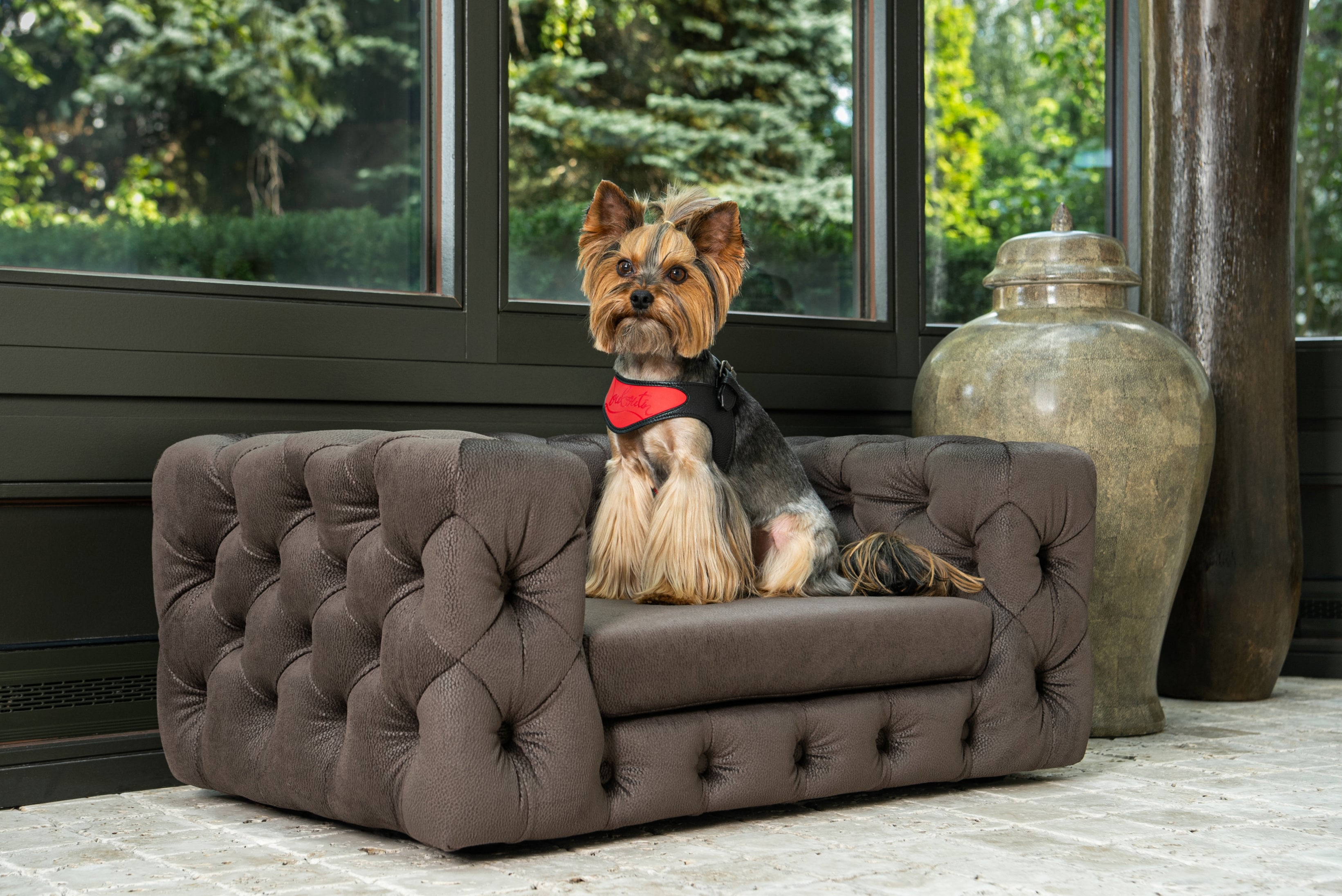

If you've ever had a conversation with your dog, you're certainly not alone.
We tell them where we're going, ask if they're hungry, explain that we'll be back soon, and sometimes find ourselves telling them about our entire day. And then comes that familiar look—the tilted head, focused eyes, or sudden excitement when one particular word is mentioned.
But how much of what we say do dogs actually understand?
Science suggests the answer is more fascinating than simply "they recognise a few commands."
Dogs Really Do Listen to Our Words
For years, it was often assumed that dogs responded mainly to our tone of voice rather than to the actual words we used.
Research has shown that the reality is more complex.
Brain-imaging studies have found that dogs process the meaning of familiar words and the intonation of our voice as separate pieces of information. In other words, your dog isn't necessarily reacting only because you said something in an excited voice—they can also pay attention to what you actually said.
So when your dog suddenly appears after hearing the word walk in the middle of a conversation, it may not be coincidence.
Words and Tone Both Matter
Dogs don't listen to language exactly as humans do, but they appear remarkably sensitive to the combination of words and emotion.
In a landmark study published in Science, researchers observed dogs' brain activity while they listened to familiar praise words spoken with different intonations.
The dogs responded most strongly to praise when both the positive word and the positive tone matched.
That means saying "good boy" enthusiastically is not necessarily the same experience for your dog as saying exactly the same words in a completely neutral voice.
They are listening to more than one part of the message.
Some Dogs Can Learn the Names of Objects
Perhaps one of the most extraordinary discoveries about canine language involves dogs that can remember the names of individual toys.
Researchers studying so-called Gifted Word Learner dogs found that some exceptional dogs were capable of learning several new toy names within just one week—and could remember those names weeks or even months later.
These dogs are unusual, and scientists emphasise that this ability shouldn't be considered typical of every family dog. Research comparing ordinary dogs with gifted word learners found that learning multiple object labels appears to be a rare talent.
Still, it tells us something remarkable: at least some dogs are capable of connecting a spoken word with a specific object and retaining that association in memory.
Your Dog Is Also Watching You
Words are only one part of the conversation.
Dogs have spent thousands of years living alongside humans, and they have become exceptionally attentive to our behaviour.
They notice where we look, how we move, what we do with our hands, our facial expressions, and even subtle changes in our behaviour.
So when you say:
"Shall we go for a walk?"
your dog may be processing the familiar word walk, but they may also notice that you've stood up, glanced towards the door, changed your tone, or reached towards the place where the lead is kept.
To your dog, communication is the complete picture—not simply the sentence.
Dogs Can Read Our Emotions Too
Our faces may tell dogs more than we realise.
Recent research using brain imaging has found evidence that dogs can distinguish between different human facial expressions, including happiness and several negative emotional expressions. This adds to growing evidence that dogs combine multiple human signals when interpreting what is happening around them.
It's one reason your dog may seem to know that something is wrong before you've said anything at all.
They aren't reading your mind.
They're reading you.
Does Your Dog Understand Full Sentences?
Probably not in the way another person would.
If you tell your dog:
"We're going to visit Grandma tomorrow after breakfast, but first I need to finish some work."
there's no evidence that a typical dog understands the grammatical meaning of that entire sentence.
But they may recognise Grandma, notice your intonation, understand familiar contextual cues and associate them with previous experiences.
This distinction is important.
Dogs can learn meaningful associations with words, but that doesn't mean they understand human language with the complex grammar and abstract meaning that we do.
And yet, their ability to communicate with us is extraordinary precisely because they don't need to.
Why Does Your Dog Tilt Their Head When You Speak?
That irresistible head tilt may be more than just an adorable expression.
Dogs often become intensely focused when they hear something relevant or familiar. A particular word, unusual sound, or change in intonation can capture their attention as they attempt to gather more information.
The result can look remarkably like a dog trying very hard to understand what you're saying.
And in a sense, that's exactly what they're doing.
Should You Talk to Your Dog?
Absolutely.
Talking to your dog is part of the rich communication that develops between humans and their canine companions.
Using consistent words for familiar activities—such as walk, dinner, bed, or the names of favourite toys—can make those associations easier to learn.
But conversation offers something beyond vocabulary.
Your voice is familiar. Your attention matters. And the countless little interactions you share throughout the day become part of the relationship your dog builds with you.
You don't need your dog to understand every sentence for the conversation to mean something.
Perhaps Dogs Understand Us Better Than We Think
Dogs may never understand language exactly as humans do.
They don't need to.
They listen to our words, hear the emotion in our voices, observe our faces and gestures, remember routines, and learn what particular sounds mean within the world they share with us.
Sometimes your dog understands a word.
Sometimes they understand your tone.
And sometimes they simply understand you.
Perhaps that's why talking to a dog can feel so surprisingly close to having a real conversation.
Continue Reading
If you enjoyed this article, you may also like:
Why Dogs Follow Their Owners from Room to Room
Explore the fascinating reasons dogs stay close to their favourite humans—even when you're only walking into the next room.
The Psychology of Where Dogs Choose to Sleep
Discover what your dog's favourite sleeping place can reveal about comfort, security, and their relationship with you.