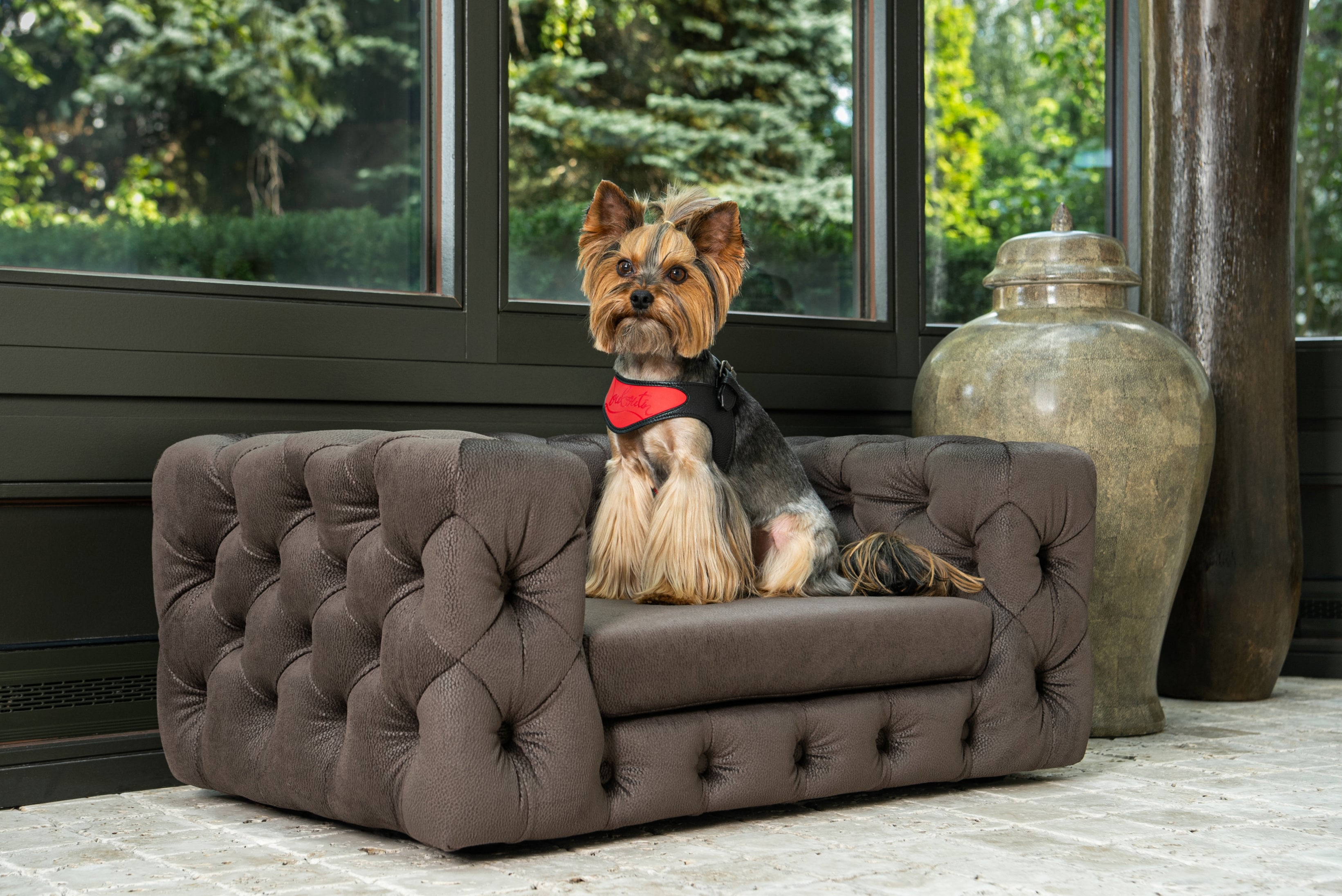

A dog bed is no longer something that has to be hidden in the corner of a room.
As interiors become more considered and cohesive, pet furniture is increasingly being treated as part of the overall design rather than as a purely practical accessory. For dog owners who care about furniture, materials, proportions, and color, the right dog bed can complement a living room instead of interrupting it.
The challenge is finding a piece that works for both the dog and the space.
What Makes a Dog Bed Look Stylish in a Living Room?
The most important factor is usually proportion.
A dog bed that is too bulky can visually dominate a room, while one that is too small may look disconnected from the surrounding furniture. The best designs tend to feel intentional — as though they belong with the sofa, coffee table, rug, and lighting already in the room.
Shape also matters.
Rounded beds can soften interiors filled with straight architectural lines, while more structured dog sofas work especially well in classic, modern-classic, and contemporary spaces.
Material is just as important. Upholstered fabrics, soft faux fur, and refined textures generally integrate more naturally into living rooms than highly technical-looking pet products.
Choose a Dog Bed That Matches Your Interior Style
A stylish dog bed should respond to the character of the room around it.
In a minimalist or contemporary living room, simple silhouettes and neutral colors often work best. Beige, taupe, cream, grey, and soft brown shades are easy to combine with stone, wood, linen, and boucle.
In more classic interiors, a structured luxury dog sofa with upholstered sides can feel more natural than a simple floor cushion.
Modern-classic interiors offer even more freedom. A sculptural dog bed, a softly curved form, or a miniature sofa can become part of the room's visual composition rather than disappearing into the background.
The goal is not necessarily to match everything perfectly. A dog bed can also introduce texture or contrast, as long as it still feels connected to the rest of the space.
Think About Color Before You Think About Pattern
Color is one of the easiest ways to make pet furniture feel intentional.
If your living room is built around warm neutrals, a beige or caramel dog bed can reinforce that palette. Dark brown, charcoal, or black can work beautifully in rooms with darker woods, marble, or strong architectural details.
A more colorful dog sofa can also become an accent piece.
The key is to treat the bed in the same way you would treat an armchair, ottoman, or decorative cushion. Ask whether the color works with the room rather than whether it is a traditional "pet" color.
This simple shift in perspective can make a huge difference.
Consider the Furniture Already in the Room
Look at the shapes surrounding the place where the dog bed will sit.
If the main sofa is deeply upholstered and substantial, a very thin dog mat may feel visually out of place. A more structured designer dog bed can create better balance.
Likewise, if the room contains soft, rounded furniture, a circular or curved dog bed can repeat those shapes and make the interior feel more cohesive.
This is one of the reasons dog sofas can work particularly well in carefully designed homes. Their proportions and construction relate more closely to human furniture, helping them feel like part of the same visual language.
Where Should You Put a Dog Bed in the Living Room?
Placement matters almost as much as design.
Many dogs prefer resting somewhere they can still see or hear what is happening around them. A beautiful dog bed placed far away from the family may remain unused, while a less attractive cushion beside the sofa becomes the favourite spot.
A good position is often close to the main seating area but outside the busiest walking path.
Near a sofa, beside a fireplace, next to a large window, or beside an armchair can all work well depending on the room.
The ideal position creates a sense of closeness without making the dog bed feel like an obstacle.
Stylish Dog Beds Still Need to Be Comfortable
Design should never replace comfort.
A dog that loves curling up may prefer raised sides or a more enveloping shape. Dogs that stretch out may need a wider sleeping surface. Some prefer exceptionally soft materials, while others like firmer support.
This is why the best luxury dog beds combine aesthetics with an understanding of how dogs actually rest.
A beautiful bed that your dog never uses is not a successful piece of furniture.
The design has to work from both perspectives.
Why Designer Dog Furniture Works in High-End Interiors
Traditional pet products are usually designed first for function and only later for appearance.
Designer dog furniture reverses that thinking.
It considers upholstery, stitching, proportions, structure, texture, and finish in the same way as other pieces of furniture in the home.
This is particularly important in open-plan interiors, where the living room, dining area, and kitchen are visually connected. There is nowhere for an unattractive pet bed to disappear.
A well-designed dog sofa can instead become a deliberate part of the interior.
Dog Beds Can Be Part of the Room, Not an Addition to It
At Pet Empire, this idea sits at the heart of our approach to high-end pet furniture.
A model such as the Mystique Pet Sofa works particularly well in modern-classic and contemporary interiors because of its structured silhouette and upholstered form.
The softer, more rounded Yin Yang Dog Sofa can complement interiors with curved furniture and organic shapes, while the Glamour Dog Sofa brings a more architectural, classic character inspired by traditional upholstered furniture.
Different interiors call for different forms, just as different dogs have different sleeping preferences.
The Best Dog Bed Should Work for Both of You
Choosing a dog bed for the living room is ultimately about finding balance.
Your dog needs somewhere comfortable, familiar, and suitable for the way they like to sleep.
You need a piece that does not compromise the room you have carefully created.
The best stylish dog beds for living rooms achieve both.
They give dogs their own place while allowing the interior to remain considered, cohesive, and beautifully designed.
Because pet furniture does not have to look like an afterthought.
It can simply look like furniture.