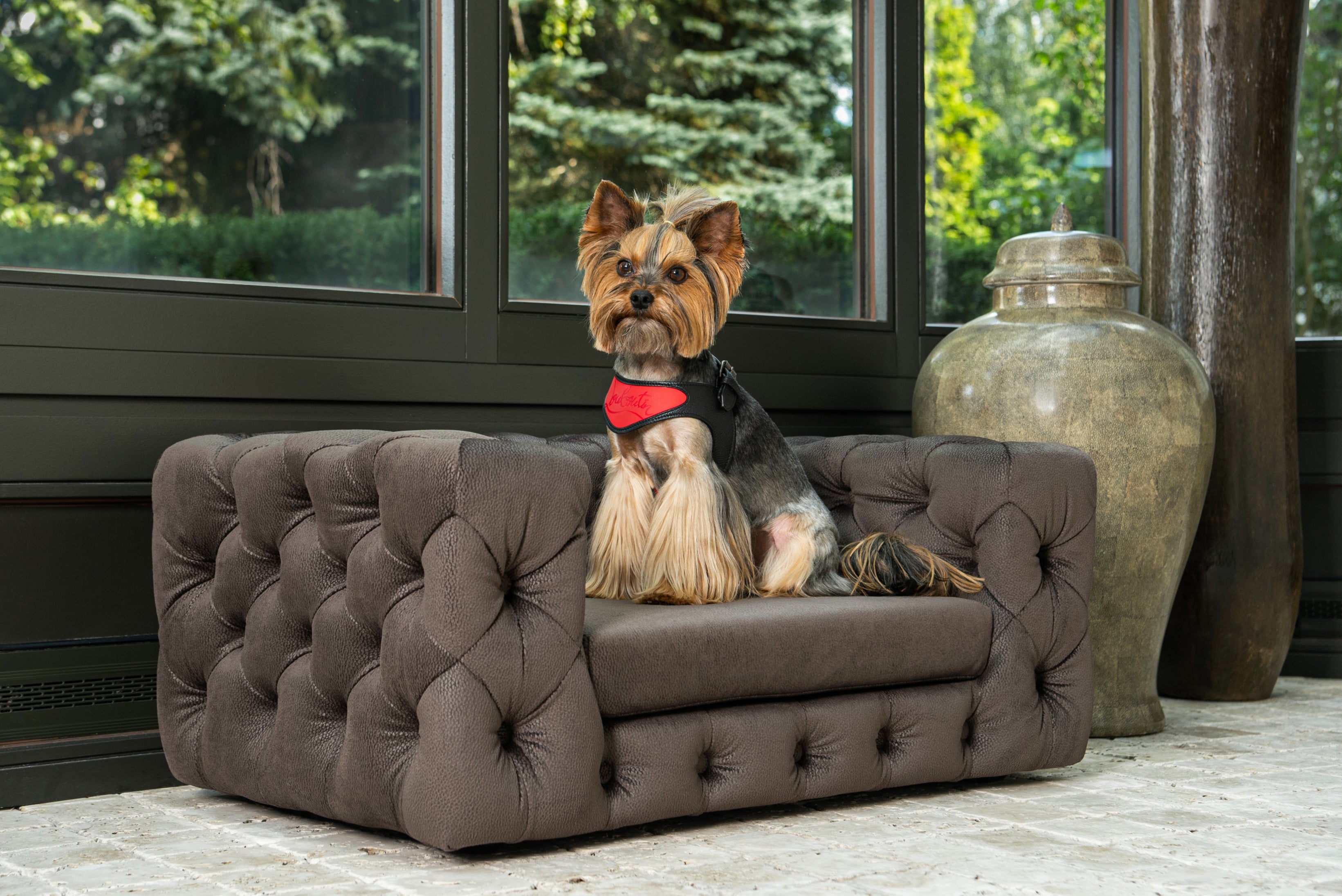

Choosing the right dog bed is only half the decision.
Where you place it can make just as much difference.
A beautiful dog bed may look perfect in one corner of the room, but if your dog never uses it, the placement is not really working. The best location should balance comfort, visibility, quiet, and the way your dog naturally likes to spend time with you.
So where should you put a dog bed in the living room?
Put the Dog Bed Somewhere Your Dog Actually Wants to Be
Many dogs prefer resting close to the people they live with.
That does not necessarily mean directly beside your feet, but it often means somewhere within sight of the main seating area.
A dog bed placed beside the sofa, near an armchair, or along the edge of the living room can give your dog a comfortable place to relax while still feeling involved in what is happening around them.
Dogs are social animals, and research into dog–human relationships suggests that many dogs use their owners as an important source of security and social connection. Research on attachment behaviour in dogs
This is one reason a beautifully designed bed hidden far away in an unused corner may be less appealing than a simpler resting place closer to the family.
Avoid the Busiest Walking Paths
A dog bed should feel calm, not constantly interrupted.
Placing it directly between the sofa and the kitchen, in front of a doorway, or in the middle of the main walking route can make it difficult for a dog to settle.
People walking past, doors opening, and furniture being moved can turn an otherwise comfortable location into a surprisingly busy one.
A better position is usually slightly to the side of the room.
This keeps the dog close to the household without putting their resting area directly in the flow of traffic.
Near the Sofa Is Often One of the Best Locations
For many homes, beside the main sofa is one of the easiest places to position a dog bed.
It allows the dog to remain close during quiet evenings, conversations, or time spent watching television without needing to climb onto human furniture.
From an interior-design perspective, this position also makes it easier to treat the dog bed as part of the furniture arrangement.
A structured designer dog sofa beside a human sofa can look intentional in exactly the same way as an ottoman, occasional chair, or side table.
The key is scale.
The dog furniture should complement the room rather than compete with the main seating.
Can You Put a Dog Bed Near a Fireplace?
A fireplace can create one of the most inviting areas in the living room, particularly during colder months.
Many dogs are naturally drawn to warm spaces, so positioning a bed nearby can be very appealing.
However, “near” should never mean too close.
Dogs should have enough distance from an open flame, hot fireplace screen, stove, or heating source to avoid overheating or accidental burns. A dog should also always be able to move away from the heat easily.
The American Kennel Club recommends keeping dogs safely away from fireplaces and other heat sources rather than allowing them unrestricted access immediately beside them. Fireplace safety for dogs
When placed at a safe distance, though, a dog sofa near a fireplace can become one of the most elegant and comfortable parts of the room.
What About Placing a Dog Bed by the Window?
A window can be another excellent location.
Many dogs enjoy watching what happens outside, especially when the view includes people, birds, gardens, or passing activity.
Natural daylight can also make the resting area feel pleasant and integrated into the room.
But there are a few practical considerations.
Direct sunlight can make certain areas very warm during the day, while large windows may feel cold during winter. A dog that becomes overstimulated by people or animals outside may also find a quieter location more relaxing.
As always, your dog's behaviour is the best guide.
If they naturally choose to lie near a particular window, that is useful information.
Use the Dog Bed to Complete the Furniture Layout
Dog furniture does not have to be positioned as an afterthought.
In a carefully designed living room, it can become part of the visual balance of the space.
If one side of the room feels empty, a beautifully upholstered dog sofa can create weight and structure.
If the room has strong straight lines, a rounded dog bed can soften the composition.
And if the main furniture is upholstered in warm neutrals, choosing a dog bed in beige, caramel, taupe, or soft brown can make the entire room feel more cohesive.
This is where luxury dog furniture works differently from a simple floor mat.
It can participate in the interior.
Match the Bed to the Architecture of the Room
Different types of pet furniture suit different spaces.
A structured model such as the Glamour Dog Sofa can work beautifully beside classic or modern-classic furniture, especially in rooms with panelled walls, marble, upholstered sofas, or architectural detailing.
The softer Yin Yang Super Soft Pet Sofa works particularly well in relaxed contemporary interiors and can introduce a softer shape into a room with more linear furniture.
A model such as the Mystique Pet Sofa can suit interiors where a more architectural, tailored shape feels appropriate.
The dog bed does not need to match the human sofa exactly.
It simply needs to feel as though it belongs in the same room.
Leave Enough Space Around the Dog Bed
Dog furniture needs breathing room too.
Pushing a bed tightly between two pieces of furniture can make the area look cramped and may also make it less convenient for the dog to enter and leave.
A small amount of open space around the bed helps define it as its own piece of furniture.
This is especially useful with luxury dog sofas, which often have more structure and visual presence than traditional pet beds.
Think about the bed in the same way you would think about an armchair.
It should have a clear place within the composition of the room.
The Best Placement Is Usually a Balance
There is no single perfect position for every dog bed.
The best location depends on your dog, your living room, and your daily routine.
Ideally, the bed should be:
close enough for your dog to feel connected to the household,
quiet enough for them to rest comfortably,
safe from excessive heat or busy walkways,
and positioned in a way that works visually with the rest of the furniture.
When those elements come together, a dog bed stops feeling like something added to the room later.
It becomes part of the room itself.
And that is exactly what well-designed pet furniture should do.