
A sleeping dog can be surprisingly expressive. A paw begins to twitch, the whiskers move, the eyes shift beneath closed lids, or a tiny sound suddenly breaks the silence.
It is tempting to imagine that our dogs are replaying their favorite walk, chasing another dog through the park, or waiting for us to come home.
But do dogs really dream?
Science cannot tell us exactly what a dog experiences inside a dream. Dogs cannot wake up and describe it to us. What researchers can study, however, is what happens in their brains and bodies while they sleep — and those findings make canine sleep far more fascinating than it might first appear.
Do Dogs Really Dream?
Dogs experience recognizable stages of sleep, including both non-REM and REM sleep. REM stands for rapid eye movement, a sleep stage strongly associated with vivid dreaming in humans.
Research using non-invasive polysomnography has documented REM sleep and rapid eye movements in domestic dogs, giving researchers a fascinating insight into canine sleep.
That does not allow scientists to know exactly what dogs dream about.
However, similarities in sleep physiology, together with familiar behaviors such as twitching, small movements, and occasional vocalization during sleep, make the idea of dream-like mental activity in dogs entirely plausible.
So when your dog’s paws begin to move while they sleep, imagining a little adventure may not be unreasonable — we simply cannot know what that adventure contains.
What Happens During REM Sleep in Dogs?
During REM sleep, the brain remains active while the body rests. Dogs move through different stages of sleep rather than remaining in one uniform state throughout the night.
Small twitches, movements of the paws or face, and quiet vocalizations can occur while a dog is sleeping.
Most brief movements during sleep are part of normal sleep behavior. However, unusually intense, prolonged, or repetitive movements should not automatically be assumed to be dreaming, as veterinary medicine also recognizes sleep disorders that can cause abnormal movements.
For everyday dog owners, the important distinction is simple: an occasional twitch or tiny sound during peaceful sleep is very different from repeated or dramatic episodes that seem unusual for that particular dog.
Does Sleep Help Dogs Process Their Day?
This is where canine sleep becomes particularly interesting.
Research suggests that sleep may play a role in learning and memory in dogs.
In one study, family dogs learned new commands before sleeping. Researchers recorded their sleep using non-invasive EEG and found that characteristics of their sleep were associated with changes in performance after waking.
You can read the study on sleep and memory consolidation in dogs here.
That does not mean scientists have proved that dogs dream specifically about something that happened earlier that day.
But it does suggest that sleep is not simply a period when the brain switches off. Important processing continues while a dog rests.
Do Dogs Dream About Their Owners?
It is a lovely thought — but scientifically, we simply do not know.
Dogs form strong social relationships with people and pay close attention to our voices, gestures, scents, and routines while awake. But there is currently no reliable way to determine whether a particular person appears in a dog's dreams.
So could your dog dream about you?
Possibly.
Can science confirm it?
Not yet.
And perhaps that little mystery is part of the charm of watching a beloved dog sleep.
Why Good Sleep Matters for Dogs
Whether or not we ever discover exactly what dogs dream about, good-quality sleep itself is important.
Like people, dogs need opportunities to rest without constant interruption. Age, activity, environment, routine, and individual temperament can all influence how and when a dog chooses to sleep.
Giving a dog a familiar and comfortable place to rest therefore makes sense for reasons that go far beyond aesthetics.
A dedicated resting area allows a dog to settle, withdraw from activity when needed, and return to a place that feels familiar and distinctly their own.
Creating a Comfortable Place for Rest
A dog's sleeping place does not have to be hidden away from the rest of the home.
Many dogs enjoy resting close to everyday family life, where they can relax while still remaining connected to what is happening around them.
A soft, enveloping Yin Yang Super Soft Pet Sofa can create a cozy dedicated space for longer periods of rest.
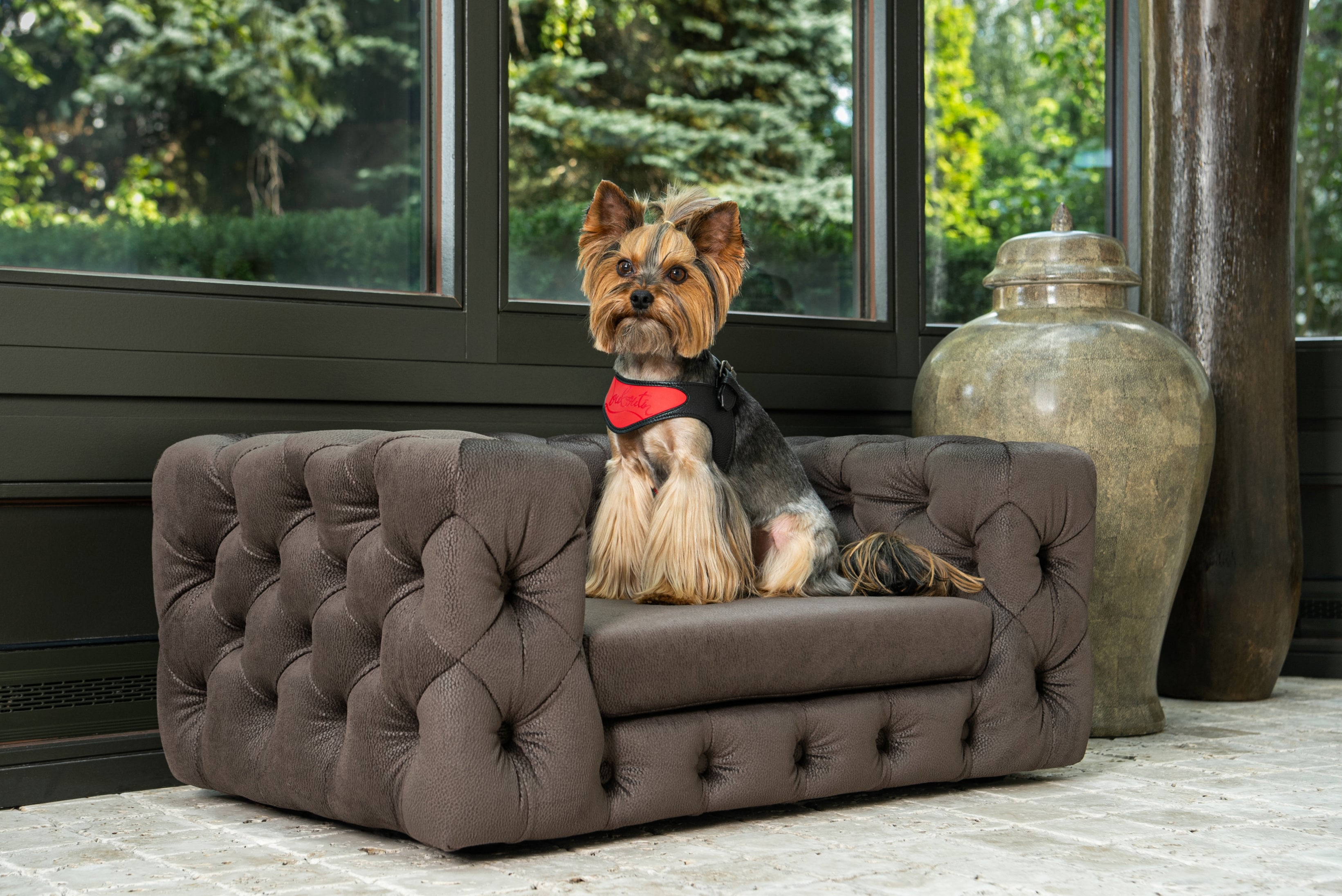
For dogs that prefer a more structured, furniture-inspired form, the Glamour Luxury Dog Sofa offers a classic alternative.
Thoughtfully designed luxury dog sofas and designer dog furniture can provide dogs with a place that feels distinctly their own while still becoming a natural part of the interior.
Because while we may never know whether our dogs are dreaming about walks, treats, familiar places — or us — we do know that sleep is an active and important part of their lives.
And perhaps some mysteries are better left to them.